There are places in the world that exist not just on maps, but in the margins of dreams. Chefchaouen is one of them.
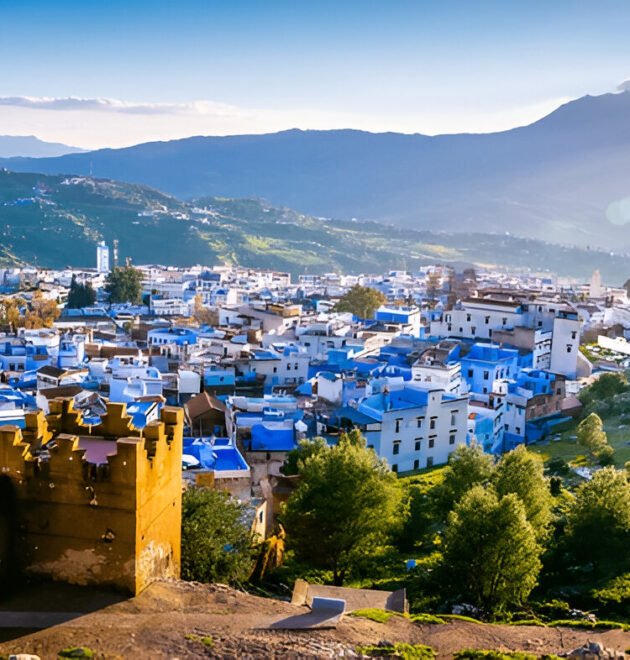
Tucked into the folds of the Rif Mountains like a secret whispered between peaks, this town doesn’t announce itself — it reveals itself. First, a flicker of blue in the distance. Then, as you wind through olive groves and terraced slopes, the full vision unfolds: an entire city washed in cerulean, lapis, and sky — a dream painted in pigment, rising from the earth as if summoned by longing.
They call it the Blue Pearl. But that feels too cold, too gem-like for something so alive. Chefchaouen breathes. It pulses with quiet energy, a place where time slows to the rhythm of prayer calls and rustling leaves. Founded in the 15th century as a fortress of refuge, it became a sanctuary for those fleeing persecution — Jews, Muslims, exiles from Al-Andalus. And in their sorrow and hope, they began to paint their homes blue. Some say it was to remember heaven. Others believe the color kept insects away, or cooled the stone in summer’s grip. But standing in its alleys, I suspect it was something deeper: a way to live inside a prayer.
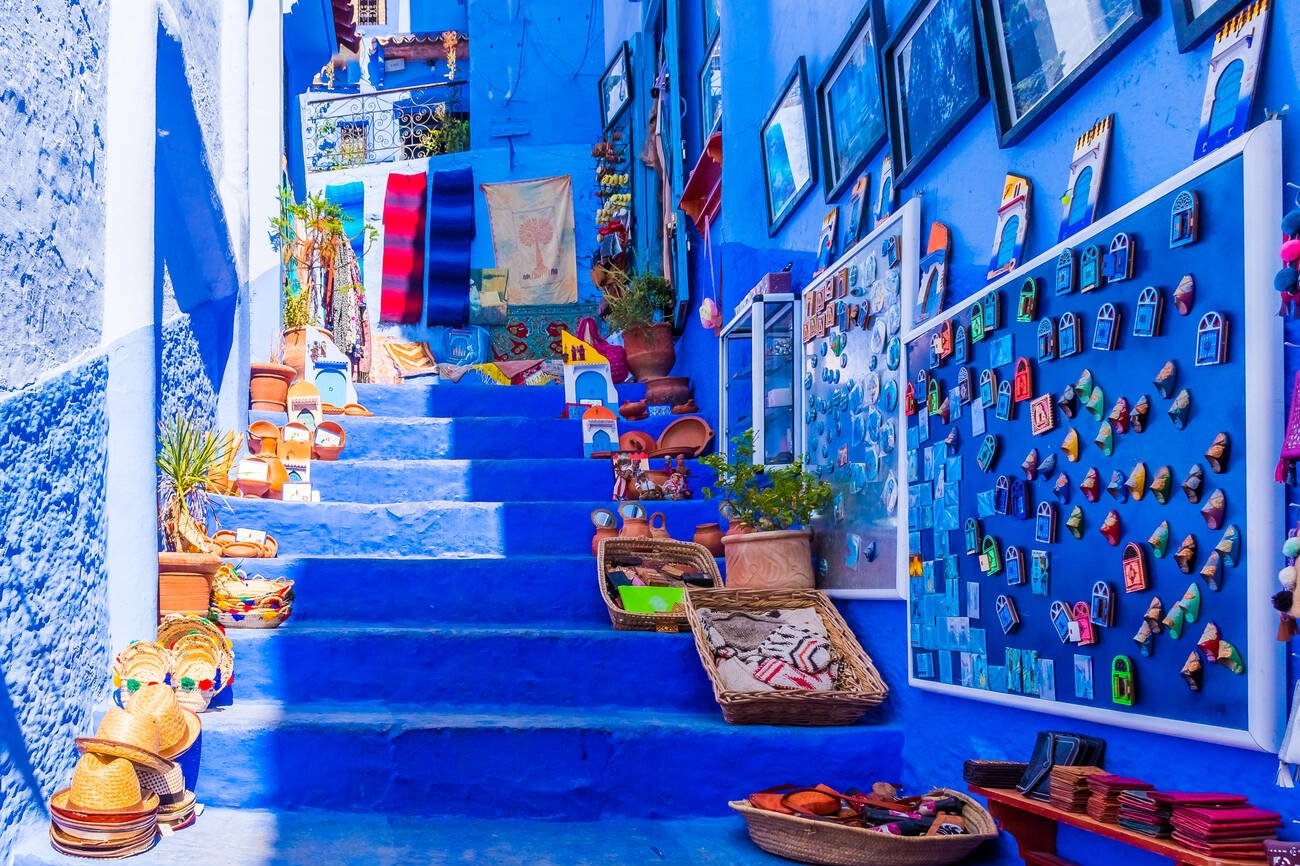
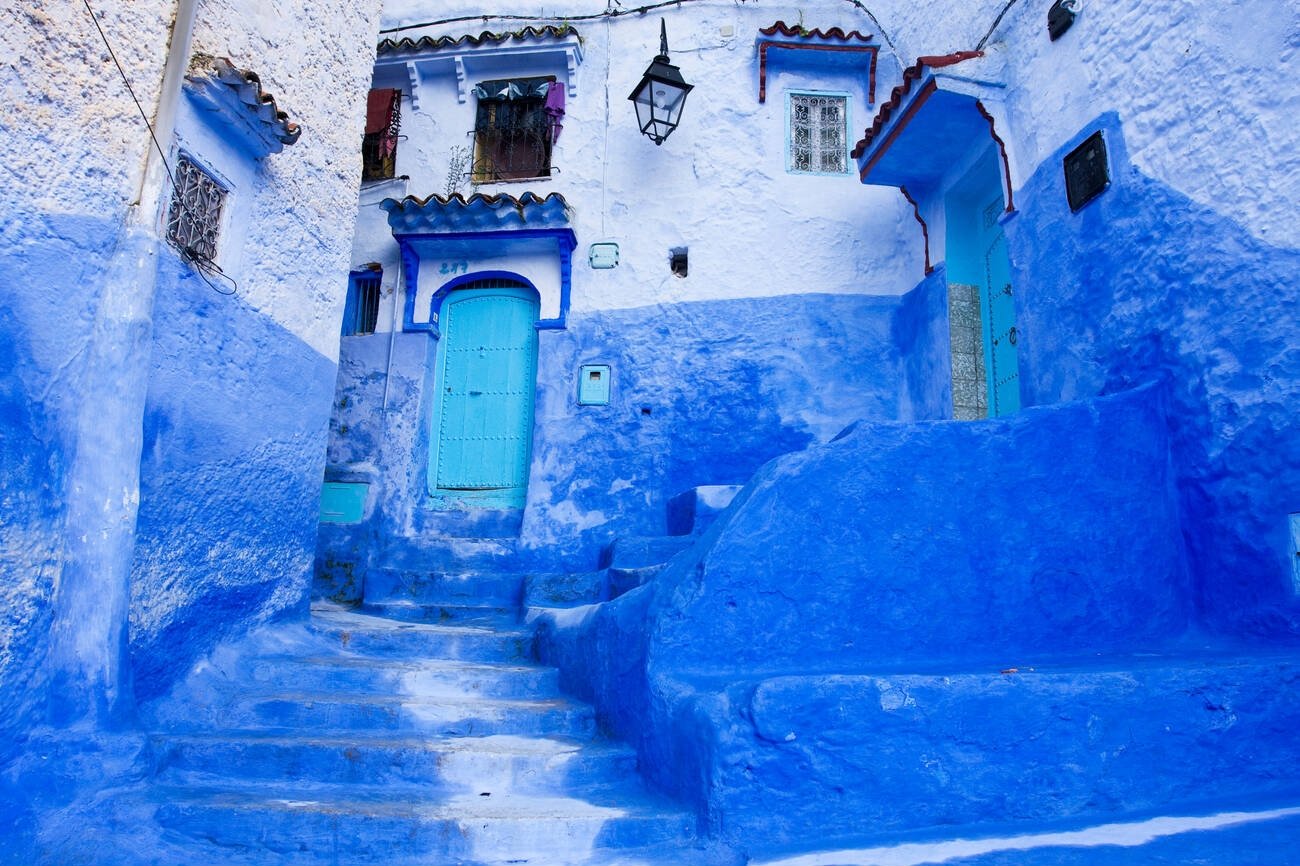
Every wall, every stair, every fountain — drenched in blue. Not one shade, but many: indigo where the sun doesn’t reach, powder-blue where children chalk hopscotch grids, cobalt on doorways where cats nap in shafts of light. The color isn’t uniform; it’s layered, imperfect, alive — like the town itself. You don’t walk through Chefchaouen so much as drift, letting the currents of narrow streets carry you past flower pots spilling geraniums, past women in djellabas balancing loaves on their heads, past old men sipping mint tea under arches that frame the sky.
—everwherenow
Where the Sky Came Down to Earth
To the north, the mountains rise like ancient guardians. Talassemtane National Park cradles hidden trails that lead to Akchour Waterfalls, where turquoise pools tumble beneath a natural rock bridge — Pont d’Allah — as if nature itself were crafting miracles. Climb Jebel el-Kelaa at dawn, and you’ll watch the valley wake beneath a mist that parts like a curtain, revealing the blue city nestled in green, glowing like a mirage.
And then, the silence. Not absence, but presence. The hush of a place that has learned to listen.
The food here tastes of the land — wild thyme, mountain herbs, goat cheese sharp with terroir. You’ll find tagines laced with preserved lemon and local cheese, trout pulled from cold streams, bread baked in communal ovens. Sip tea on a rooftop as the call to prayer drifts over rooftops, and you’ll understand: this is not tourism. It’s communion.
Artisans still weave wool into thick blankets dyed with indigo, their hands moving like their grandmothers’ once did. In dim-lit stalls, you’ll find rabab instruments — Berber fiddles with haunting voices — and silver jewelry etched with Amazigh symbols older than memory. Buy not because you must, but because you’re holding a story.
Stay in a riad where the courtyard fountain murmurs through the night. Let the scent of orange blossoms follow you to sleep. Wake to a breakfast of honey-drizzled msemen and fresh goat’s milk. And when you leave — because you must — you’ll carry something intangible: the feeling of having touched a softer world.
It doesn’t shout. It sings — quietly, in shades of blue.
So come if you seek beauty. But stay if you seek peace. This town was built by those who needed refuge. And somehow, centuries later, it still offers it — to anyone willing to walk its painted streets with open eyes, and a quiet heart.